
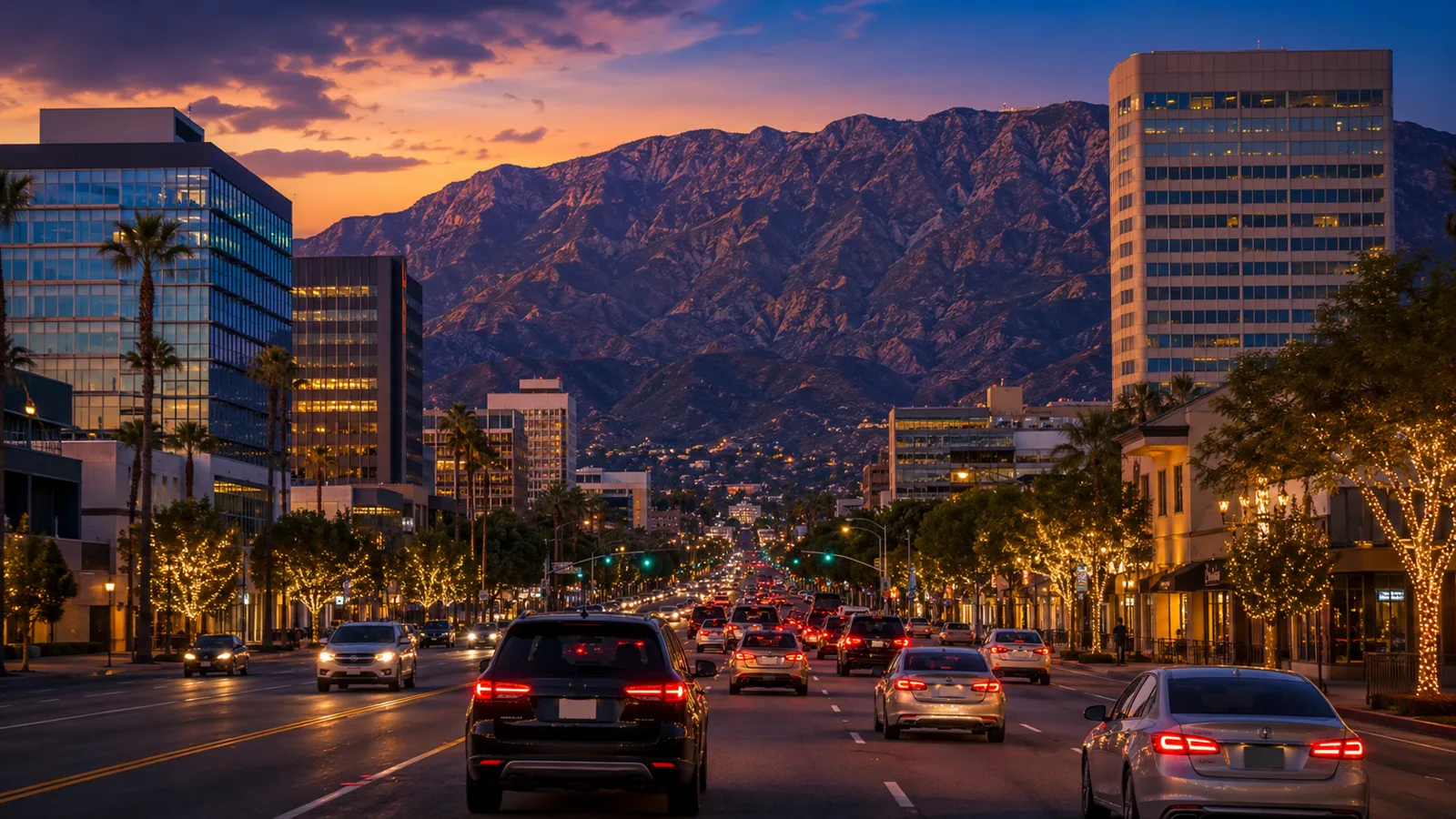
Car Accident Lawyer in Glendale, CA
Glendale drivers deal with some of the most congested interchanges in Los Angeles County. The Ventura Freeway (SR-134), the Golden State Freeway (I-5), and the Glendale Freeway (SR-2) all converge here, and the daily merge battles they create produce rear-end collisions, sideswipes, and multi-car pileups year after year. Add the stop-and-go retail traffic around Brand Boulevard and the Americana district, plus heavy pedestrian crossings in the downtown core, and it is no surprise that Glendale consistently ranks among the busier cities in the county for reported crashes.
- ★★★★★5.0 Google Reviews
- Former Insurance Defense Attorney
- Free Consultation
What Makes Glendale Collisions Different
Many Glendale crashes happen at low to moderate speed: a distracted driver looking for parking near the Brand Boulevard shops, a rushed lane change where the 134 meets the 5, a left-turn collision on San Fernando Road. Insurance companies love to argue that lower-speed impacts mean minor injuries. They are wrong, and the medical literature says so. Soft-tissue injuries, concussions, and disc injuries routinely come out of crashes the adjuster calls a fender-bender.
We know that playbook because we used to run it. Before founding NMF Law Group, APC, our lead attorney spent nearly a decade defending insurance companies. When the adjuster assigns your Glendale claim a number, we know exactly how that number was built and what it takes to move it.
What to Do After a Crash in Glendale
- Get medical attention the same day, even if you feel fine. Adventist Health Glendale and USC Verdugo Hills Hospital both operate emergency departments nearby.
- Photograph the vehicles, the intersection, and your visible injuries before anything is moved.
- Get the Glendale Police Department report number if officers respond.
- Do not give the other driver’s insurer a recorded statement.
- Talk to a lawyer before accepting any offer.
Where Glendale Injury Cases Are Handled
Most personal injury lawsuits arising from Glendale collisions are filed in the Los Angeles County Superior Court’s personal injury hub in downtown Los Angeles. We handle every filing, appearance, and deadline so you can focus on treatment and recovery. The consultation is free and there are no attorney’s fees unless we win.
Where Glendale crashes concentrate
Glendale sits at the meeting point of three freeways, and the interchanges do most of the damage. The Ventura Freeway (SR-134) and the Golden State Freeway (I-5) cross at the city’s southern edge, and the Glendale Freeway (SR-2) feeds in from the northeast. Merge conflicts at those transitions produce rear end and sideswipe collisions, and the traffic backing onto surface streets pushes the same conflicts down to the arterials.
On the surface, Brand Boulevard and Central Avenue carry heavy retail traffic through the Americana and the Galleria, where drivers are looking for parking rather than at the road. Colorado Street and San Fernando Road handle commuter volume and commercial vehicles. Glendale Avenue and Verdugo Road carry traffic up into the hills, where sightlines tighten and grades steepen.
Pedestrian volume in the downtown core is high, which changes the analysis in a way insurers frequently get wrong. Under Vehicle Code § 21950(a), a driver must yield to a pedestrian in a marked crosswalk or in an unmarked crosswalk at an intersection, and most Glendale corners qualify whether or not anyone painted lines.
Treatment in and around Glendale
Glendale is well served for emergency and follow up care, including Glendale Memorial Hospital and Health Center, Adventist Health Glendale, and USC Verdugo Hills Hospital in nearby Tujunga. Treating close to home matters for practical reasons beyond convenience. Consistent local records, without long gaps between visits, are much harder for an adjuster to characterize as a minor injury than a scattered record across distant providers.
What we handle for Glendale clients
Beyond ordinary collisions, Glendale cases regularly involve Uber and Lyft crashes around the entertainment and retail districts, pedestrian injuries in the downtown core, and head injuries that are missed at the emergency room because the initial CT scan came back normal. If a road defect or a signal failure contributed, a claim against a public entity carries a six month deadline under Government Code § 911.2 rather than the ordinary two years.
Frequently Asked Questions
How long do I have to file after a Glendale car accident?
In most California injury cases, two years from the date of the crash. Claims against public entities require a government claim within six months, so call early if a city vehicle or dangerous road condition was involved.
What if the other driver was uninsured?
Your own uninsured motorist coverage may apply, and we handle those claims too. Bring your policy to the consultation and we will map out every available source of recovery.
How much does a Glendale car accident lawyer cost?
Nothing up front. We work on contingency: no attorney’s fees unless we recover compensation for you.
Where do most Glendale car accidents happen?
The heaviest concentrations are around the SR-134 and I-5 interchange, the SR-2 approach, and the retail corridors along Brand Boulevard and Central Avenue near the Americana and the Galleria. Colorado Street and San Fernando Road carry significant commuter and commercial traffic.
I was hit crossing the street in downtown Glendale. Do I have a claim?
Likely yes. Vehicle Code section 21950(a) requires drivers to yield to pedestrians in any marked crosswalk or in an unmarked crosswalk at an intersection. Most corners qualify even without painted lines.
A pothole or broken signal contributed to my Glendale crash. What is different?
If a public entity may be responsible, a written claim generally must be presented within six months under Government Code section 911.2, rather than the ordinary two year deadline. Photograph the defect immediately.
Do I have to use a Glendale doctor?
No. You may treat where you choose. Consistent treatment without long gaps is what matters most, because gaps are the argument insurers use to discount an injury.


Learn more about how we handle car accident cases, explore our full personal injury practice, or see the other areas we serve. Call (213) 800-0706 for a free consultation.
Glendale drivers hit by another motorist have ten days to deal with the DMV, one of several clocks the 10-day DMV deadline most drivers miss lays out.
For pedestrian, scooter, and other injuries in Glendale, see our Glendale accident and injury lawyer page.